With proper strategies, you may be able to maximize your opportunities and help manage stress and confusion for your loved ones. Learn the critical details to address when creating your own estate strategies. We're here to help.

Let’s talk about employer loyalty. For much of the 20th century, Americans (by and large) followed a standard script: enter the workforce and work for a single company for decades, then throw a retirement party at 65 and cash in a pension – a reward for years of company loyalty. This pension provided retirement income; usually, a percentage of the yearly salary the employee earned while working. American Express established the first corporate pension plan in the US in 1875. By 1960, about half of the private sector employees had a pension. Of course, in 1960 the average life expectancy was 67, meaning that if you retired at 65 (standard at the time), the average pension only had to provide income for two years.
Since 1960 there have been many advances in modern medicine raising average life expectancy to 79. Suddenly, plans designed to cover a few years of post-retirement income were expected to cover retirees well into their 80s and 90s. Companies offering pensions began to realize that their retirement plans were becoming increasingly – sometimes prohibitively – expensive to fund. As pension expenses continued to rise towards the end of the 20th century, many companies were forced to design new systems to ensure their employees were financially secure come retirement.
The 401(k) plan hit the streets in 1980. The employer-sponsored retirement plan was rolled out as a replacement to traditional pensions and has since become the most common retirement savings mechanism in America. In essence, the 401(k) provides a tax-deferred way for employees to set aside wages for retirement. Employees elect to divert a certain percentage of their income each year to a 401(k) account. The diverted funds grow tax-free in that account until the employee retires.
In addition to providing the account, most companies offer a savings-match system. For instance, in a 3% match system, the company would match up to 3% of an employee’s elective contributions to their 401(k) account. The employer match provides a strong incentive for employees to start planning for retirement. If an employee doesn’t divert AT LEAST the match threshold into a 401(k) they miss out on the employer match – in other words, they lose out on free money from their employer.
Let’s talk about the benefits. Funds in a 401(k) account are able to grow tax-free. Because growth is not disturbed by capital gains taxes, accounts are able to grow faster than a standard individual account. Of course, there’s always a catch: money in employer-sponsored plans – like a 401(k) – cannot be withdrawn prior to age 59 ½ without paying penalties. Most plans offer options for the participants to increase their contribution rate on an annual basis, and small increases in contribution rate (even as small as 1%) year over year can make a huge difference by the time you retire.
Contributing to employer-sponsored retirement plans such as a 401(k) or 403(b) – the non-profit version of a 401(k) – is a vital part of preparing for retirement. The money is automatically deducted before your paycheck is cut, making it easy to budget and painlessly save for retirement at the same time.
Contributing to employer-sponsored retirement plans is an essential step towards retirement planning – but it is only the first step.
Please contact me at zach.swaffer@trilogyfs.com if you are interested in discussing the next steps you can take to ensure retirement security.
Have you ever envisioned a life where the chains of daily grind are broken well before the conventional retirement age, paving the way for a life of financial freedom and leisure? Embracing financial discipline and frugality can pave the way to a comfortable early retirement, answering the pressing question: Can meticulous financial planning and a frugal lifestyle significantly hasten your journey to early retirement?
Financial planning goes beyond merely saving a portion of your income; it's about understanding and rectifying financial bad habits that may impede your journey towards financial stability. Everyday financial misbehaviors such as impulsive spending, credit card debt, and the lack of a structured financial plan for emergencies often go unnoticed but have a long-term detrimental impact on financial health. Addressing these personal finance habits is the first step in financial planning.
Frugality is about making informed and restrained financial decisions to save money. A frugal lifestyle encourages avoiding unnecessary expenses and finding value in what you spend.
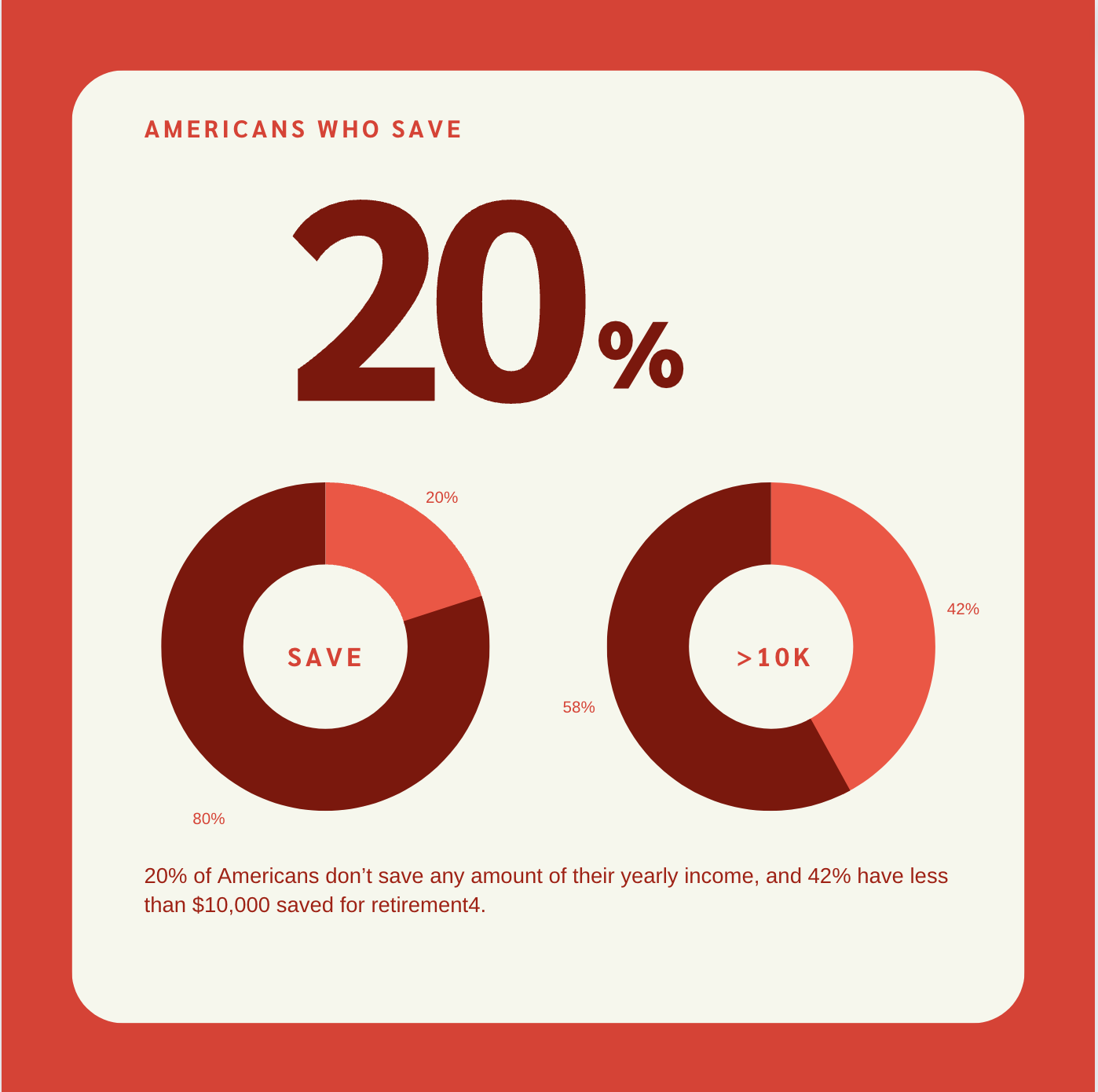
Did you know 20% of Americans don’t save any amount of their yearly income, and 42% have less than $10,000 saved for retirement4.
There are myriad tools and resources available to aid in your financial planning journey. Budgeting apps, financial advisors, and online courses are excellent resources. Trilogy Financial, for instance, offers a Decision Coach program designed to provide additional accountability and coaching to individuals seeking financial guidance.
Easily Meet with a Certified Financial Planner.
The quest for early retirement often begins with a thorough re-evaluation of one's financial plan, identifying areas of improvement, and capitalizing on unforeseen savings opportunities. The year 2020 saw many Americans saving more, with an average of 10% more money saved compared to 2019, mainly due to lifestyle changes induced by the pandemic. Some redirected these savings towards home improvements, while others saw it as a stepping stone towards drafting a solid financial plan aimed at debt reduction, college planning, or accelerating the journey to financial independence.
Various individuals and communities dedicated to frugal living and meticulous financial planning have emerged over the years, showcasing diverse pathways to early retirement. Here are a few noteworthy examples:
These cases highlight the transformative impact of frugal living and prudent financial planning to achieve early retirement dreams. They speak to the importance of continuous financial plan evaluation, adapting to changing circumstances, and leveraging savings opportunities to expedite the journey to financial independence and early retirement.
The road to early retirement is laden with challenges, primarily stemming from our own financial bad habits. However, if we create a financial plan, adopt a frugal lifestyle, and leverage available resources, overcoming these challenges and retiring early is an achievable goal.